





The Role of Glucagon Receptor Agonism in the Metabolic Balance of Retatrutide in Treating Obesity and Related Disorders
Authors: Scott Kaplan, Giovanni Mikesell, Noah Pitz, Eli Umbaugh
Teacher: Daniel Shannon
School: Archbishop Moeller High School, Montgomery, OH
PBD ID: 8YW5
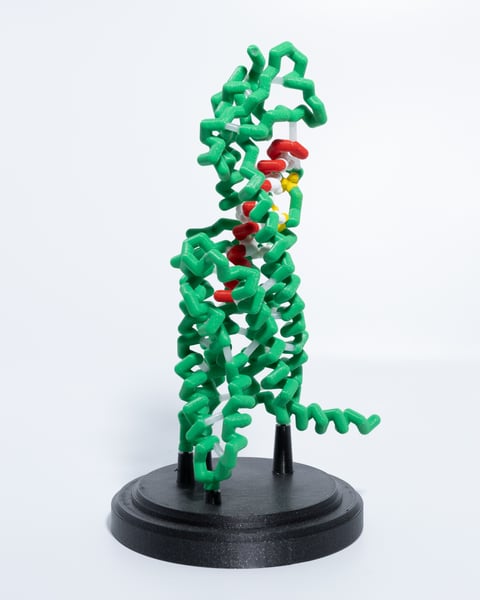
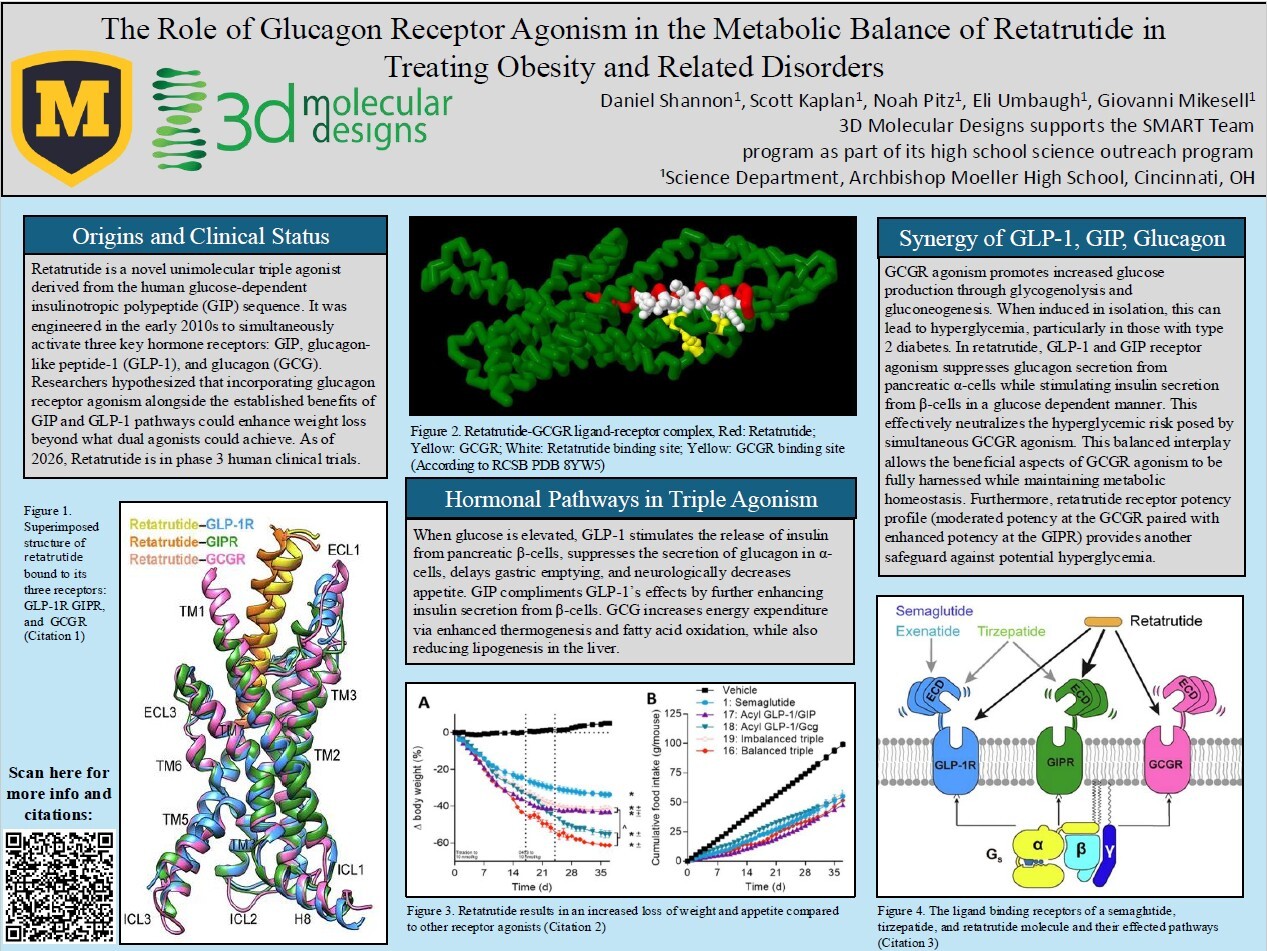
Obesity is one of the largest issues that researchers are attempting to effectively address through drug therapy. Many drugs, such as Ozempic and Mounjaro, employ semaglutides and tirzapetides, respectively, to facilitate weight loss using receptor agonists. These receptor agonists forcibly open receptors to further the absorption of incretin hormones, therefore signaling a decrease in hunger and stabilizing blood sugar levels. Receptor agonists currently used in medicine are primarily single or double receptor agonists. These are involved with the GLP-1 and GIP receptors; these hormones primarily involve the secretion of insulin, especially after eating meals. However, a recently discovered synthetic protein, Retatrutide, involves the GLP-1 and GIP receptors in addition to the glucagon receptor (GCGR), giving it its status as a triple agonist. This additional pathway may allow for higher energy expenditure through increased thermogenic activity, which in turn further progresses weight loss. GCGR signaling increases the breakdown of fatty acids in the brown adipose tissue (BAT), which is mitochondria dense. This metabolic pathway is responsible for removing energy in molecules. The increase in heat could potentially be responsible for the increase of heart rate during the human trials of retatrutide testing. GCGR is also responsible for the breakdown of glycogen into glucose using glucagon, which could then increase blood sugar levels. Although this may seem like an adverse effect, this ability to raise blood sugar levels could counter hypoglycemia.
Citations
- Conceição-Furber, Ellen, et al. “Is Glucagon Receptor Activation the Thermogenic Solution for Treating Obesity?” Frontiers in Endocrinology, U.S. National Library of Medicine, 25 Apr. 2022, pmc.ncbi.nlm.nih.gov/articles/PMC9081793/#:~:text=Further%2C%20activation%20of%20the%20GCGR,body%20weight%20b.
- Knerr, Patrick J., et al. “Next Generation GLP-1/GIP/Glucagon Triple Agonists Normalize Body Weight in Obese Mice.” Direct Science, Molecular Metabolism, 2022, www.sciencedirect.com/science/article/pii/S2212877822001028.
- Li, Wenzhuo, et al. “Structural Insights into the Triple Agonism at GLP-1R, GIPR and GCGR Manifested by Retatrutide.” Nature News, Nature Publishing Group, 17 July 2024, www.nature.com/articles/s41421-024-00700-0.
- “Omizzur Hot Retatrutide Peptide Supplier: Hot Selling Products in 2025.” Omizzur, www.omizzur.com/retatrutide-peptide-supplier.html. Accessed 5 Feb. 2026.
- “PMC Home.” National Center for Biotechnology Information, U.S. National Library of Medicine, pmc.ncbi.nlm.nih.gov/. Accessed 5 Feb. 2026