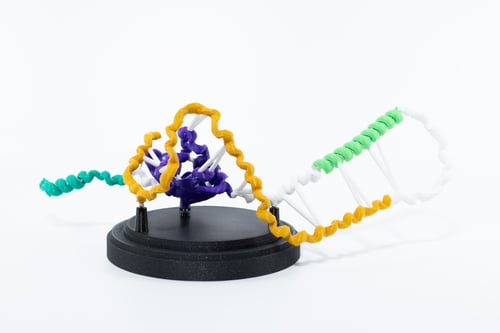




Locating Conserved Regions Across Programmed Cell Death Protein 1 Complexes Through Comparative In Silico Analysis
Authors: Hrithik Ranganathan, Nixon Banister, Drake Heimsoth, Zander Gluckman
Teachers: Chris Elniff
School: Medical Professions Academy, Olathe North High School
Programmed cell death protein 1 (PD-1) binds to its ligands, PD-L1 and PD-L2, to form the PD-1 ligand complexes. These complexes act as a checkpoint responsible for regulating the immune system’s self-tolerance. When these complexes are formed, the response is inhibited, which provides a pathway for cells to pass immune detection and inhibit T-cell activation. In humans, PD-1 consists of a signal domain, an extracellular IgV domain, a transmembrane region, and an intracellular tail. The regulatory function of PD-1 is carried out through the motifs of the intracellular tail: an immunoreceptor tyrosine-based inhibitory motif (ITIM) and an immunoreceptor tyrosine-based switch motif (ITSM). The receptory function is conducted through ligands binding to the IgV domain. PD-L1 and PD-L2 both consist of an IgV-like domain, an IgC-like domain, a transmembrane region, and an intracellular region. Orthologs of these proteins are expressed across several species, with varying structures. Analysis between ortholog structures and sequences can identify potential critical regions of the complex due to assumed evolutionary pressure leading to conservation. Through the use of molecular visualization software and multiple sequence alignment programs, major regions and sequences of conservation were identified within the IgV and intracellular domains of PD-1. Both PD-L1 and PD-L2 appeared to be very highly conserved in the IgV and IgC domains, with partial conservation in the transmembrane region. These sequences/regions are likely vital to the protein function–such as binding, anchoring, or signalling–and could be modified to provide an avenue for immune detection of cancer cells. This mechanism plays a crucial role in cancer immunology due to cancer cells upregulating the ligands, allowing for a system in which the function of the complex is abused/hijacked to restrict the immune response. Immunotherapies target this by blocking the interactions of the PD-1 complexes, eliminating this checkpoint. These findings serve as a basis for further research into the exact interactions and critical regions of the complex, which could provide insight into potential mechanisms for cancer immunotherapies utilizing the checkpoint inhibition route.