





Genetic Codon Charts Teacher Notes
Download your educator guide, printable codon charts, and student activity guides below.
Two student activity sheets are included — use one, the other, or both!
Codon Charts —showing all 64 possible triplet codons and the amino acids they encode—have been around since the mid-1960s, when the Genetic Code was first determined. The 1968 Nobel Prize in Physiology or Medicine was awarded to Marshall Nirenberg, Har Gobind Khorana, and Robert Holley for their contributions to understanding the genetic code.
It is important to teach the Genetic Code because this is the foundational concept that connects the DNA world (a sequence of 4 nucleotides) with the world of proteins.
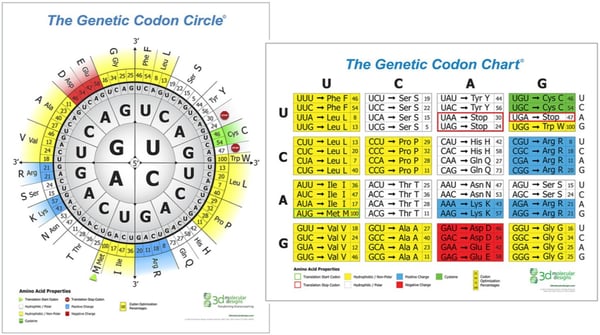
Triplet Code
If it were a 1-letter code (A, G, C, T), we could only encode 4 amino acids. If it were a 2-letter coded (AA, AG, AC, AT, GA, GG, GC, GT, CG, CG, CC, CT, TA, TG, TC, TT), we could encode 16 amino acids. However, since we need to encode 20 amino acids, we must use a 3-letter (triplet) code. There are 64 possible 3-letter codons.
Codon - Anticodon Interaction
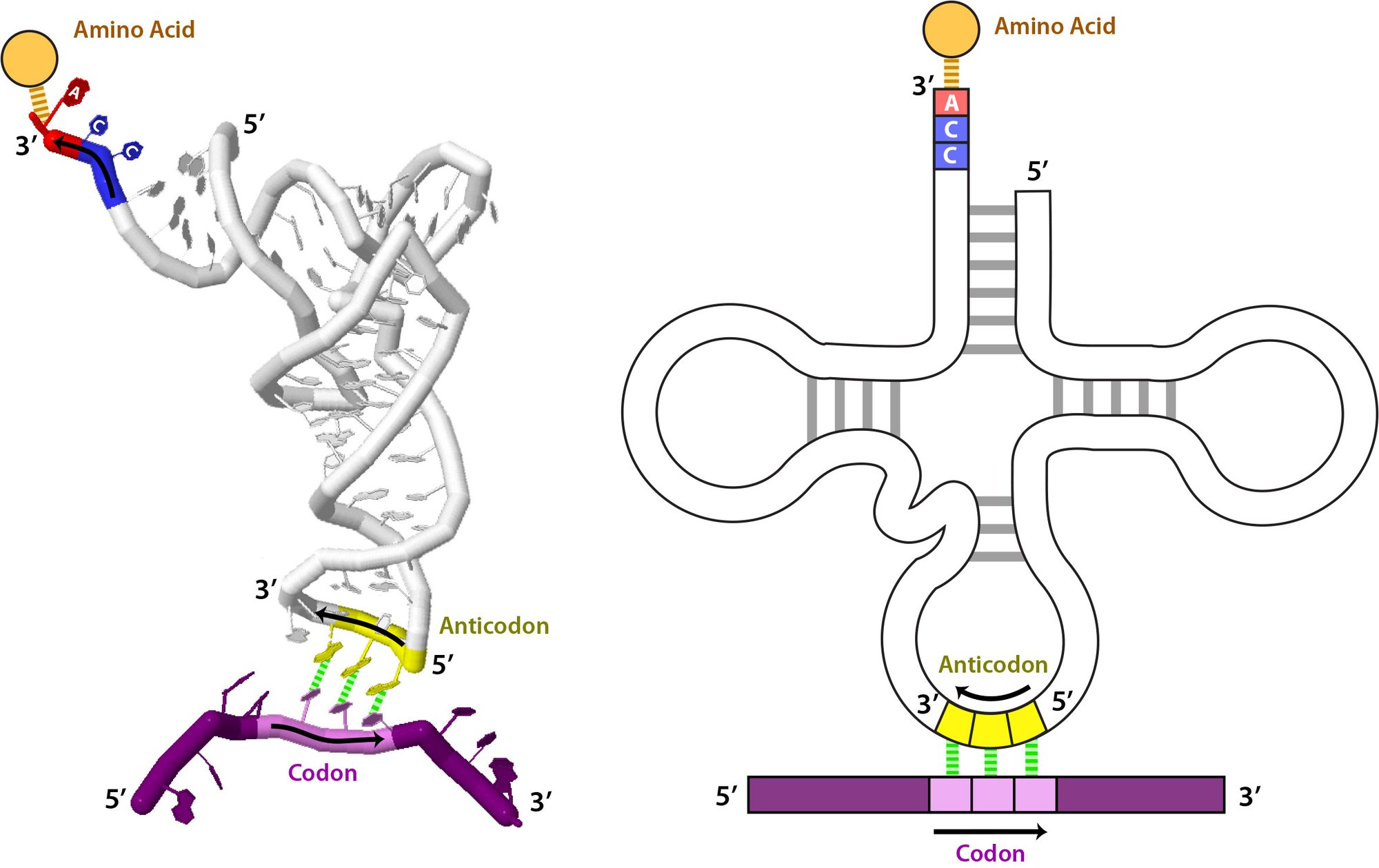
Codon-anticodon interactions are how genetic instructions in messenger RNA (mRNA) are read and translated into proteins by the ribosome. A basic understanding of this process is essential for teaching gene expression and protein synthesis. The triplet codons in mRNA form anti-parallel Watson-Crick base pairs with the anticodon in tRNA.- A codon is a group of three nucleotides on mRNA that codes for an amino acid.
- An anticodon is a complementary group of three nucleotides on transfer RNA (tRNA).
Degenerate Code
Because there are 64 possible triplet codes… and only 20 amino acids, it is also a Degenerate Code. This means that some amino acids are encoded by more than one triplet codon. And not all codons are used with equal frequency. This results in something called Codon Bias. Check out our blog post, “Thinking About Amino Acids,” for more information about the importance of codon bias in designing mRNA vaccines.
Wobble Hypothesis
The Wobble Hypothesis, proposed by Francis Crick in 1966, states that the first two bases of the mRNA codon pair strictly with the anticodon of tRNA, but the third base—the "wobble position"—allows non-standard base pairing. This flexibility allows for fewer distinct tRNA molecules than codons, enabling efficient translation.
Understanding the Wobble Hypothesis helps students grasp why there are 64 possible codons but fewer than 64 tRNAs (about 40-45 in most cells). But this is a topic we don’t recommend covering with General Biology students.
Two Unique Features of 3D Molecular Designs' Genetic Codon Charts:
- Each codon is color-coded to indicate the chemical nature of the amino acid that it encodes. This reinforces the connection between the DNA World – composed of nucleotides – and the Protein World – composed of amino acids. This color-coding scheme is used again in 3D Molecular Designs’ Amino Acid Starter Kit©.
- This Codon Circle includes the human codon usage frequency numbers for each codon. For example, both CUG and CUA encode a leucine amino acid. But the CUG codon is used 40% of the time in human genes while the CUA codon is only used 7% of the time.
Additional Resources & Related Materials
Genetic Codon Charts Resource Guide
Thinking About Amino Acids Blog Post
Genetic Codon Posters – Laminated posters promote a seamless connection between the triplet codon in mRNA and the chemical property of the amino acid it encodes
/AASK-MTU%201.jpg?width=300&height=240&name=AASK-MTU%201.jpg "AASK-MTU 1")
Amino Acid Starter Kit© – Explore the chemical properties of amino acids
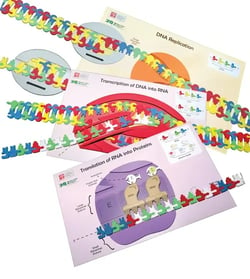
Flow of Genetic Information Kit© – Make sense of the Central Dogma as students model translation, transcription, and replication
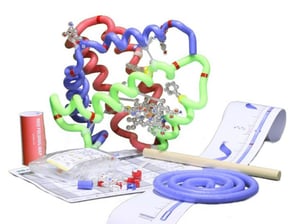
ß-Globin Folding Kit© – Investigate how amino acid sequence drives protein structure
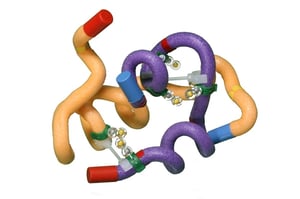
Insulin mRNA to Protein Kit© – Connect transcription, translation, and protein folding
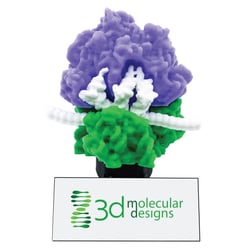
AR-Enhanced Ribosome Translation Micro-Model - Scan the integrated QR code to unlock an augmented reality (AR) animation demonstrating the ribosome's critical role in translating mRNA into protein
Find more free teaching resources and classroom kits at 3dmoleculardesigns.com