





Meet the Instructors
Tim Herman, PhD
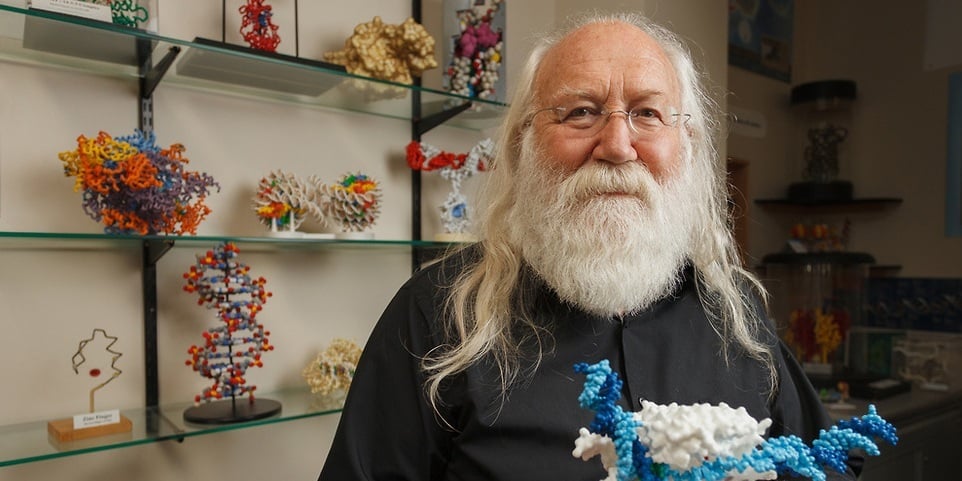
Tim Herman, PhD has been a driving force to introduce 3D printing technology to molecular sciences education and academic research communities for 23 years. He has been cited as the grandfather of 3D printing in the biosciences. Through his efforts, he met seven Nobel Prize Laureates and engaged in providing them with 3D printed models of molecular structures they had researched.
Tim established the Center for BioMolecular Modeling (CBM) at the Milwaukee School of Engineering in 1998 and led a staff of educators and a 3D print technician. In addition to utilizing 3D printing technologies, the CBM offered professional development courses for science educators and student outreach programs to bridge the gap between the research laboratories and science classrooms. His SMART (Students Modeling a Research Topic) Team program grew to include 60 teams across the US.
Tim has had continuous funding from the National Institutes of Health (NIH) through its Science Education Partnership Award (SEPA) program, as well as funding from the National Science Foundation.
Founding Partner and Chief Science Officer of 3D Molecular Designs, Tim has also led research at 3D Molecular Designs, which has received nine Small Business Innovative Research grants from NIH and the National Science Foundation to develop innovative educational models and kits. Tim has an innate ability to design hands-on experiences that help students understand key concepts to construct their own foundational knowledge of the molecular world. The CBM and 3D Molecular Designs worked closely together for 22 years until the CBM merged with 3D Molecular Designs in 2022.
Keri Shingleton, PhD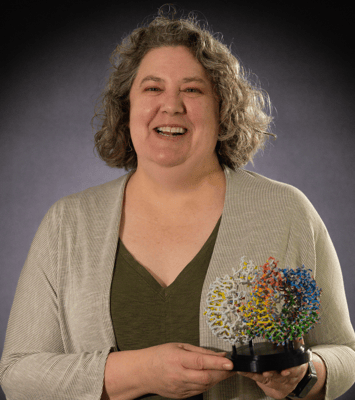
Keri Shingleton, PhD is a veteran biology educator with over two decades of experience teaching at Holland Hall School in Tulsa, Oklahoma. She earned her doctorate in Biology and Biomedical Sciences from Washington University in St. Louis, where her research focused on population genetics and evolutionary biology. Recognized for her excellence in teaching, she received the National Association of Biology Teachers’ Outstanding Biology Teacher Award for Oklahoma and has been honored with multiple teaching awards for her impact in the classroom.
Keri is deeply engaged in advancing science education through national collaborations and curriculum development. She has served as a Teacher Ambassador for Howard Hughes Medical Institute BioInteractive since 2009 and has contributed to widely used, freely accessible science education resources through partnerships with the Genetic Science Learning Center, HHMI, and the College Board, including the development of Pre-AP Biology curriculum. Her work emphasizes equitable, phenomenon-driven instruction and helping students build deep conceptual understanding of complex biological systems.
A long-time collaborator with 3D Molecular Designs, Keri has contributed to multiple NIH-funded initiatives, served on teacher advisory boards, and helped develop and test model-based instructional materials. As a Model Teacher Consultant, she leads workshops across the country, supporting educators in implementing three-dimensional, model-centered teaching practices. Keri brings a unique blend of classroom expertise, curriculum design, and professional learning leadership to the Modeling the Molecular World course, where she is dedicated to helping teachers translate complex molecular concepts into meaningful learning experiences for students.
Jim Lane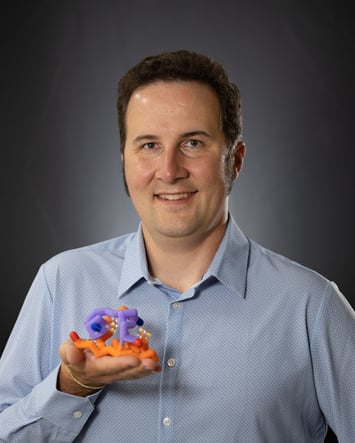
Jim Lane is an experienced science educator with over 17 years of teaching at both the high school and collegiate levels, currently serving as a Life Science Instructor at Mahtomedi High School in Minnesota. His career reflects a deep commitment to advancing science education through innovative pedagogy, curriculum development, and meaningful student engagement. A recipient of the National Association of Biology Teachers’ Outstanding New Biology Teacher Award, Jim has consistently demonstrated excellence in teaching and leadership in science education.
Jim plays an active role in shaping science teaching and learning on a national scale. He is a Senior Fellow of the Knowles Teacher Initiative and a Howard Hughes Medical Institute BioInteractive Ambassador, where he contributes to the development and facilitation of high-quality professional learning for educators. He also served as a curriculum designer and writer for the BSCS Biology: Understanding for Life program, a groundbreaking NGSS-aligned curriculum that emphasizes inquiry-driven, student-centered learning.
A long-time collaborator with 3D Molecular Designs, Jim has contributed to the development, testing, and implementation of multiple model-based learning tools, including kits focused on genetic information, enzymes, and CRISPR technology.
In addition to his classroom and curriculum work, Jim is actively engaged in educational research exploring the role of outdoor learning and wonder in student well-being and scientific engagement. He has also extended his impact globally through leadership in the Science for Monks program, supporting science education initiatives for Tibetan educators in India and Nepal. Across all of his work, Jim is dedicated to empowering both students and teachers to experience science as a dynamic, inquiry-driven process.
Mark Hoelzer, MFA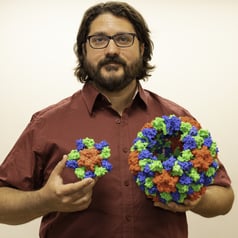 Mark Hoelzer started working at the Center for BioMolecular Modeling (CBM) and 3D Molecular Designs in 2003, shortly after graduating from Kettle Moraine High School. He had been creating physical models as resources to use in his high school classroom. Since one of his teachers had been in a CBM professional development course, she showed Mark’s work to Tim. Impressed with his models, Tim quickly hired Mark, who proceeded to work for both the CBM and 3D Molecular Designs, while earning his BFA with honors from the Milwaukee Institute of Art and Design, with a major in Illustration and minor in painting, in 2007. Mark became a partner at 3D Molecular Designs in 2019.
As Partner and Director of Material Development at 3D Molecular Designs, Mark is one of the primary designers of many 3D Molecular Designs kits and continues to work with educators, schools, and other organizations, including renown research institutions and organizations, such as the Nobel Prize Foundation, to develop 3D custom models of viruses, proteins, molecules and other molecular science-related educational resources. He is currently developing interactive digital products and features, including new augmented reality modules.