





Harnessing Machine Learning & Object Detection for Automated Evaluation of Student-folded Protein Models
Project Summary
Harnessing Machine Learning & Object Detection for Automated Evaluation of Student-folded Protein Models
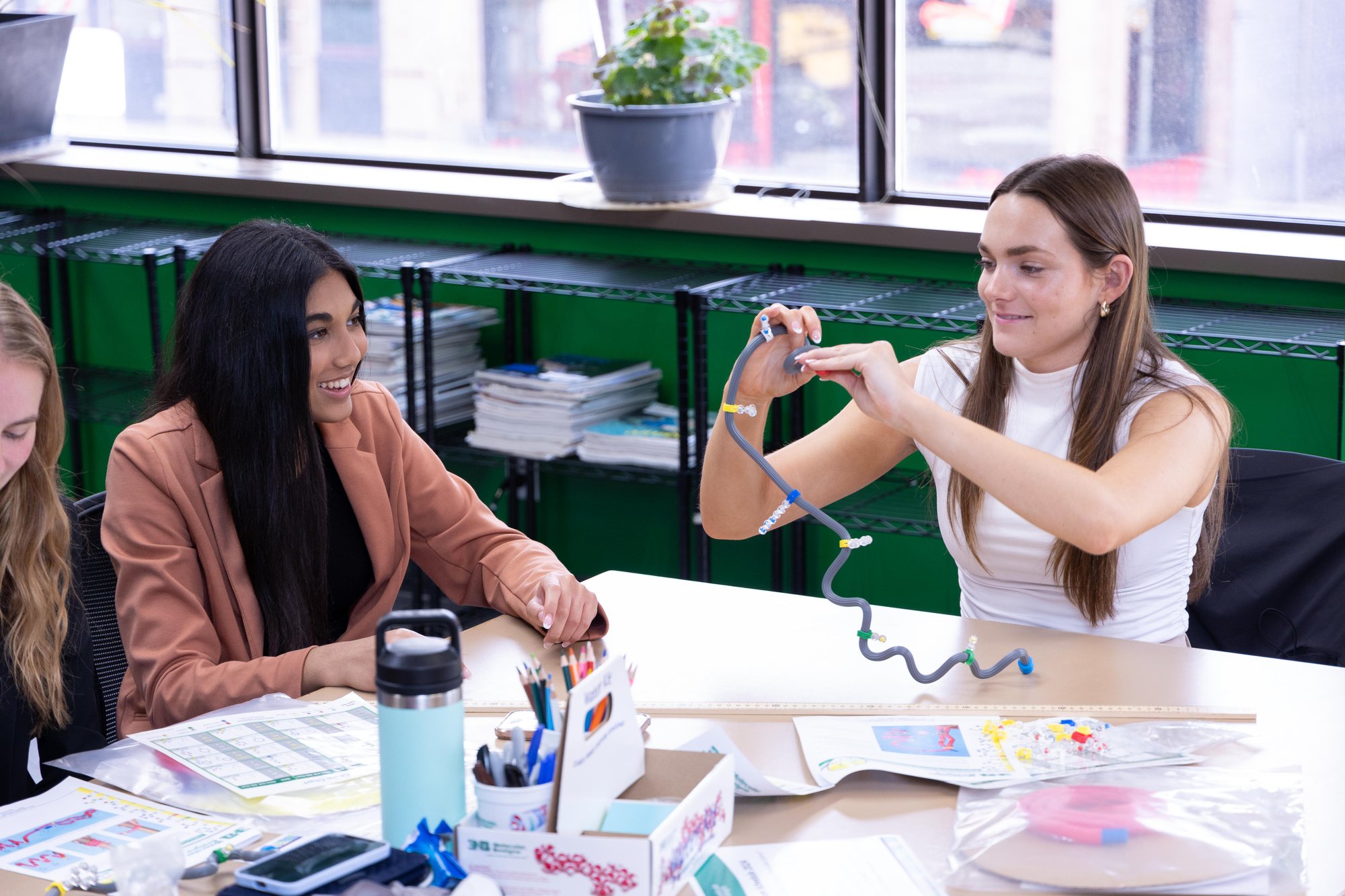
 This project aims to use Machine Learning (ML) and Object Detection (OD) to automate the evaluation of protein models folded by students, with the goal of improving bioscience education in secondary schools. By providing real-time feedback on protein folding, students can better understand protein structures and develop practical skills that are key in biological sciences.
Currently, many protein folding models lack feedback features, especially free-form models like Mini-toobers. This makes it difficult for teachers to monitor students closely and provide guidance, especially in larger or informal settings.
Our solution is to develop two apps:
-
Protein Modeling Student Training App: Students will fold Mini-toober protein models while the app offers feedback through OD to help them understand protein structure and improve their folding skills. It will also prepare students for Science Olympiad competitions.
-
Protein Modeling Educator Assessment App: Educators and judges will use this app to scan and assess student protein models. It will analyze model accuracy using OD and ML, providing quick, standardized feedback.
These tools aim to enhance bioscience education by combining hands-on learning with immediate digital feedback, improving student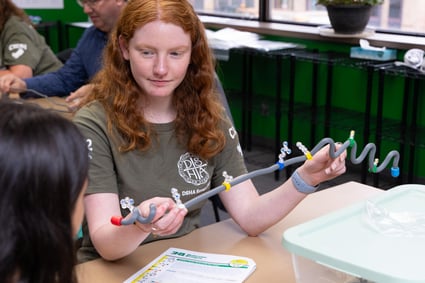 understanding and skills in protein modeling.
Phase 2 of the project will focus on assessing the features of the two applications with feedback from a broad pool of real-world users competing and judging the 2026-2027 Science Olympiad Protein Modeling Event. This will include three main areas of focus.
- Usability of the apps to provide student feedback and evaluation scores to educators
- Accuracy of the scoring and evaluation of modeled proteins
- Student learning gains resulting from real-time feedback while modeling
Project: Augmenting the Power of Physical Models with Interactive Digital Media
Contact PI: Heather Ryan, MPA
Organization: 3D Molecular Designs
This project successfully combined hands-on physical models with interactive augmented reality (AR) activities to enhance science education for students and teachers. Over two years, a nationwide team of educators and AR specialists developed and tested AR-enhanced learning activities linked to interactive 3D-printed models and mass-produced collaborative molecular modeling kits. Extensive classroom testing, involving more than 1,000 students and 60 teachers, found these activities easy to use and engaging, with six out of eight tested topics showing significant improvements in student understanding. Additional AR experiences were created for new products in development, custom industry use, and educational outreach activities. All digital materials are now available through an online hub that gives educators access to hundreds of interactive resources. The project demonstrates the power of merging physical and digital tools to make science more accessible, memorable, and effective for diverse learners nationwide.