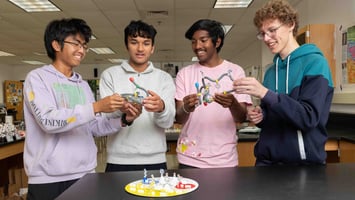




If you’re teaching high school general biology today, you’re probably navigating rich, phenomenon‑driven storylines: skin color and melanin, sickle cell anemia and hemoglobin, tuskless elephants and poaching, maybe a dog genetics unit with SNP data. These stories engage students, but they also surface a recurring challenge—at some point, you need them to really see the molecular ideas underneath the narrative.
At 3D Molecular Designs, our kits and resources are designed for that moment. We build around foundational concepts in the molecular biosciences, not around any single storyline or curriculum, so you can drop our models into whatever unit your students are already invested in. That means you don’t have to reinvent activities every time you choose a new phenomenon; you can pair the same models with many different stories to help students make sense of DNA, chromosomes, and proteins.
Kits Build Around Concepts, Not One Storyline
Our goal is simple: help students understand core molecular ideas clearly enough that your storylines become more than just compelling plots. We design our materials around concepts like the flow of genetic information, chromosome behavior, and protein structure/function, rather than anchoring them to a specific case, disease, or organism.
Practically, that means three kits can carry you through a wide range of popular high school storylines:
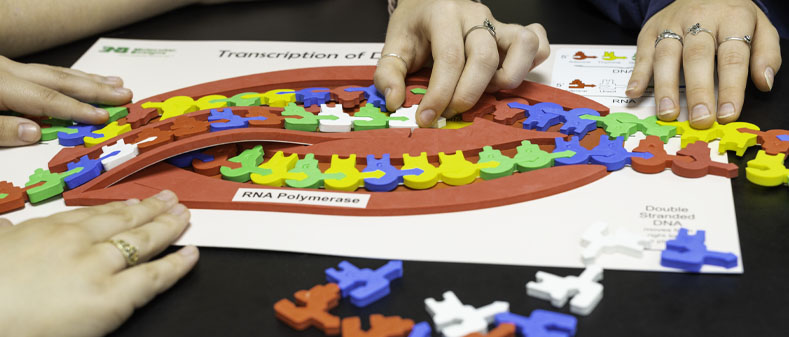
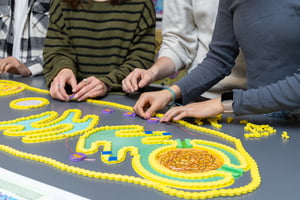
- Flow of Genetic Information Kit©: A tangible way for students to model how information moves from DNA to RNA to protein—and what changes when mutations occur.
- Chromosome Connections Kit©: A hands‑on structure for thinking about chromosomes, alleles, and inheritance patterns in families and populations.
- Amino Acid Starter Kit©: Physical models that help students connect amino acid sequence and properties to protein shape and function.
Because these kits are concept‑anchored, you can bring them into NGSS‑aligned units, Illinois Biology Storylines, OpenSciEd materials, HHMI BioInteractive cases, or your own homegrown sequences without rewriting your course. You choose the storyline; the kits follow the molecules.
How One Model Teacher Uses Kits with Student-Driven Storylines
Keri Shingleton, PhD, teaches general biology at Holland Hall in Tulsa, Oklahoma. She’s a 3DMD Model Teacher and an HHMI BioInteractive Ambassador, and her students often work through NGSS‑style driving question boards that start with phenomena like skin color, sickle cell disease, or tuskless elephants.
As those storylines unfold, students’ questions naturally shift—from “Why are some elephants born without tusks?” to “What’s happening in the genes?” or from “Why does sickle cell show up in certain families?” to “What changed at the molecular level?” Keri’s move at that point is not to abandon the storyline and switch to a separate “central dogma unit.” Instead, she pulls out whichever kit surfaces the molecular idea her students are wrestling with: FGIK when they need to see gene‑to‑protein flow, Chromosome Connections when inheritance is confusing, Amino Acid Starter when protein behavior is the key.
That pattern—start with a phenomenon, follow student questions, then plug in a kit at the molecular hinge point—is what this post is about. It’s a way of using 3D models to deepen storylines you already love, not dictate which ones you choose.
Three Storylines, Same Three Kits
To see how this works in practice, imagine three familiar high school storylines. The surface details change dramatically, but the molecular ideas repeat.
1. Melanin and human skin color
In a melanin storyline, students investigate why humans have different skin colors and how melanin production protects against UV damage. Early lessons often focus on phenotype patterns and environmental context. At some point, your students need to connect that story to genes and proteins.
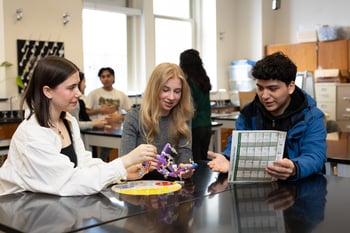 With the Flow of Genetic Information Kit©, they can physically model a gene involved in melanin production, build an mRNA, and assemble a protein model, making the abstract “gene → protein → trait” chain concrete.
 - With Amino Acid Starter Kit©, classes can explore how sequence changes might alter enzyme activity in pigment pathways, or receptor behavior in signaling pathways related to melanin.
The storyline stays grounded in human variation and adaptation; the kits come in when students are ready to see how the molecular level explains the patterns they’ve observed.
2. Sickle cell anemia and hemoglobin
In a sickle cell storyline, students trace hemoglobin shape, red blood cell function, and health outcomes through the lens of a single nucleotide change. They may analyze pedigrees, look at carrier status, and connect sickle cell prevalence to malaria exposure.
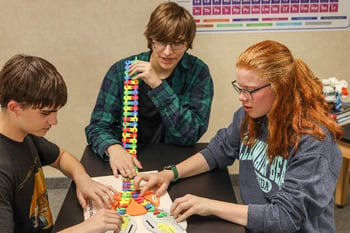 Flow of Genetic Information Kit© helps students model the specific mutation: building a segment of DNA, tracking how a changed codon produces a different amino acid, and seeing how that change propagates to the protein.
 - Amino Acid Starter Kit© lets them compare the normal and mutant amino acids, discuss hydrophobic vs charged residues, and make sense of how a small change can distort protein shape (or protein aggregation in sickle cell) and cell behavior.
- Chromosome Connections Kit© gives them a concrete way to represent alleles on chromosomes, think about heterozygotes and homozygotes, and connect inheritance patterns to the population story they see in maps and data.
Again, you don’t need a separate “models unit.” You can pull these kits into whatever sickle cell sequence you already use—HHMI‑based, Illinois Storylines, OpenSciEd, or your own—right when students’ questions move toward genes and proteins.
3. Tuskless elephants and rapid evolution
The tuskless elephants storyline asks why tuskless individuals have become more common in some populations, especially under intense poaching pressure. Students analyze data, infer selection, and investigate the genetics of tusk development.
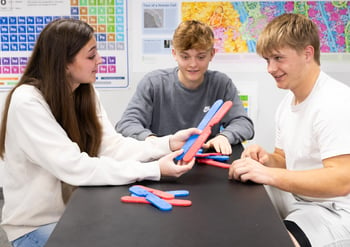 With Chromosome Connections Kit©, they can represent alleles associated with tusklessness on chromosomes, explore different genotype combinations, and reason about which individuals survive and reproduce under poaching pressure.
 - With Flow of Genetic Information Kit©, they can connect those alleles to gene expression and protein function, keeping the “gene to trait” chain visible as they interpret data on tusk development.
- With Amino Acid Starter Kit©, you can optionally extend the storyline into protein‑level thinking for classes ready to consider how specific amino acid changes might affect the proteins involved in tusk formation.
This is a non‑human adaptation story, but the molecular moves are familiar: gene variation, protein function, and trait differences under selection. The same three kits that supported your human trait storylines still apply.
Dog genetics can play a similar role for teachers who use SNP activities or GWAS‑style resources with traits like body size or coat color; Chromosome Connections Kit© and Flow of Genetic Information Kit© help students connect marker data to underlying genes and traits.
Foundational Pairings You Can Rely On
Across these storylines, you don’t need a different model for every new case. You can rely on a few foundational pairings that show up again and again:
- Flow of Genetic Information Kit© + Chromosome Connections Kit©: trait storylines where students need to connect inheritance to gene expression.
- Flow of Genetic Information Kit© + Amino Acid Starter Kit©: mutation and disease storylines where protein behavior is central.
- Chromosome Connections Kit© + Amino Acid Starter Kit©: evolution and adaptation storylines where selection acts on underlying molecular variation.
Because the kits are concept‑anchored, you can use these pairings whether you’re working within NGSS‑aligned Illinois Biology Storylines, OpenSciEd units, HHMI BioInteractive cases, or custom sequences you’ve built over years of teaching.
You Bring the Storyline; The Kits Bring the Molecules
The big idea behind all of this is that your professional judgment about storylines comes first. You know which phenomena will resonate with your students, fit your standards, and work within local constraints. Our job is to provide models that fit into those choices at the moments when students most need help seeing what’s happening at the molecular level.
So as you plan your next gen bio course, you might ask:
Which storyline are my students already curious about—and where in that story will they need the most support to see the molecules clearly?
When you reach that point, you don’t have to start from scratch. You can reach for Flow of Genetic Information Kit©, Chromosome Connections Kit©, or Amino Acid Starter Kit©, confident that the models will follow your storyline wherever your students’ questions lead.
.jpg?height=200&name=0D6A9441%20(1).jpg)