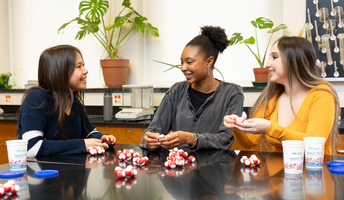




On the last morning of our Modeling the Molecular World course in Milwaukee this summer, I asked educators to describe each phase of WE² Model in their own words. Wonder, one said, is "natural curiosity that's based on previous knowledge or experience." Explore is "building that schema in the moment," another added, "building that prior knowledge with each other." Explain is "your new conceptual model." After a week of learning with models, they could describe the whole framework in three sentences.
This is the last post in our initial WE² Model series. It answers two questions: How do you bring students back through the cycle? And what does WE² Model mean for what we build next?
Let the Explanation Start the Next Wonder
WE² Model is a cycle. A good explanation gives students something new to wonder about.
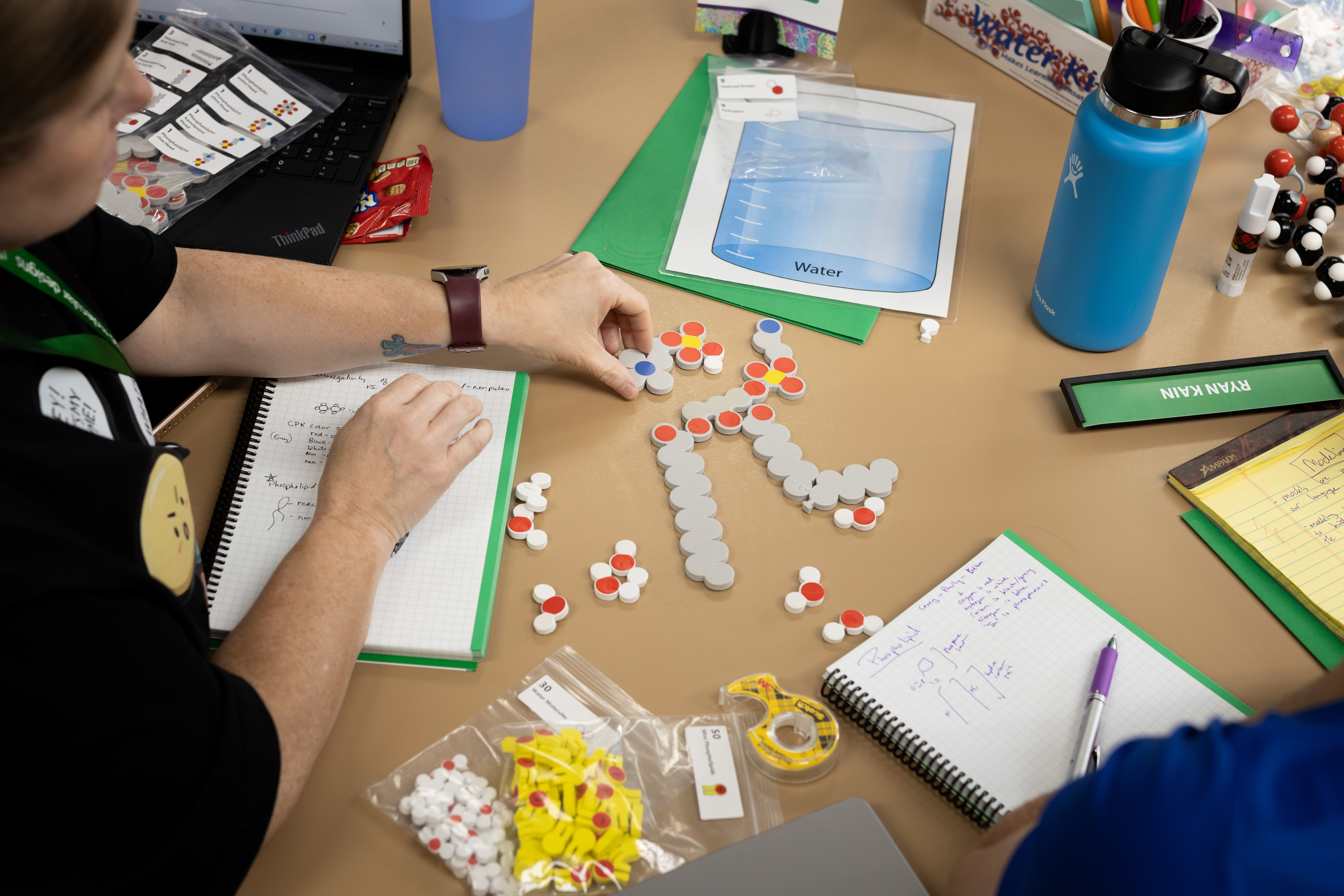
Our course showed how that works. After educators had built explanations with the Water Kit©, Jim Lane asked them to apply what they had learned, including hydrogen 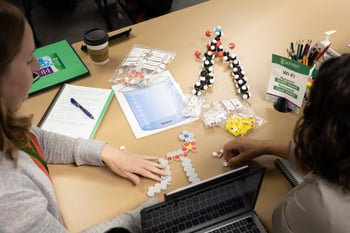 bonding and which parts are hydrophilic or hydrophobic, to parts from the Molecules of Life Modeling Kit©. Some parts were assembled as molecules. Others were single functional groups. Jim didn't name any of them. Using only their water explanations, the educators correctly predicted how water would interact with each part.
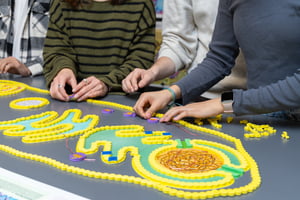
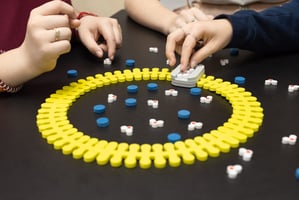
Then the next cycle began. Educators built a phospholipid and explored how water interacts with each part of it. They discovered that one end attracts water and the other doesn't, so the molecule is amphipathic. Their explanation of water had become the question about membranes.
When we reflected on the week, I walked the group back through those phases. First, they noticed what the water molecules did. Next, they added parts and complexity to figure out how things worked together. Then they built explanations and carried them into the lipids. The pedagogy is simple: When students finish an explanation, hand them a new model or a new layer of complexity, and let the explanation become the next question.
Plan With the Phases in Mind
That afternoon, educators planned their own lessons. Before they started, I asked them to stay "cognizant of what phase you are in." Knowing which phase students are in tells you what your job is. In Wonder, you hold back answers. In Explore, you give a few directions and make small redirects. In Explain, you listen for the word and the idea.
Try this with next week's plan. Mark each activity W, E, or E. Look for the phase that's missing, and check where each transition happens. If every activity is Explain, start with the model.
How WE² Model Frames Our Work
WE² Model was developed by 3D Molecular Designs in collaboration with experienced modeling educators Chris Chou, Jim Lane, Keri Shingleton, and Dan Williams. It began as a way to describe how they teach with models. Now we use it to plan everything we do.
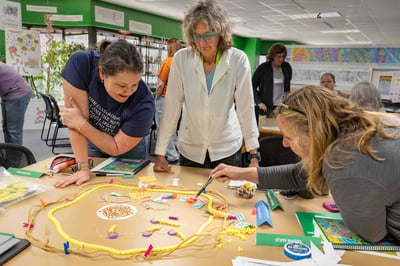
Professional learning. Modeling the Molecular World and Modeling Infection & Immunity move through Wonder, Explore, and Explain with the models, then pause so educators can reflect on the phase they just experienced. We use the same framework in our conference sessions and with SMART Teams.
 Kits and models. We've applied WE² Model to the Cell Modeling Kit© and the Molecules of Life Modeling Kit©. Two new kits in development, the Bacterial Wall Membrane Modeling Kit and the Blood Typing Kit, are designed the same way. Learners can notice and wonder about the models before any vocabulary arrives. Educators are field-testing both kits now, and we'll release them over the next year.
Activities. Our newer activities follow the same order. In Building the Perfect Cell, students brainstorm what makes something living, build and refine a cell, write a rubric for life, and then change their model when the environment changes. The Acetylcholinesterase Active Site slide decks ask students to generate questions, make predictions, and test them with the model. Designing a Biological Membrane has students design a membrane, change its parts, and evaluate the model's limits.
Research and grant proposals. WE² Model is also the framework for our research and grant proposals. It describes how learners build understanding with models, so it shapes how we design studies of that learning.
Your Turn
Use the phases in whatever order and timing fits your students and classes. Where does your next lesson start, and which phase would you add? Reply and tell us. We'd like to hear what each phase looks like in your classroom.
If you'd like to experience the cycle as a learner, join us for Modeling the Molecular World. You'll also become eligible for the Model Teacher Program, where educators help shape the resources we build next.
Thank you for reading the series. Here's every post in one place:
- Start With the Model: Introducing WE² Model
- How to Start a Lesson With Wonder
- When to Introduce Vocabulary in a Modeling Lesson
- Using Student Models as Formative Assessment
- One Framework for Everything We Build
Resources for This Lesson
- WE² Model: Wonder, Explore, Explain
- Water Kit©
- Molecules of Life Modeling Kit©
- Cell Modeling Kit©
- Building the Perfect Cell slide deck
- Acetylcholinesterase Active Site slide decks
- Designing a Biological Membrane slide deck
- Modeling the Molecular World
- 3DMD Model Teacher Program
- Our Programs, including SMART Team